Selecting a filler metal for dissimilar materials is an engineering decision about the completed joint. A consumable that can join two materials is not automatically suitable for the temperatures, loading, environment and fabrication sequence the connection will experience.
The distinction matters when repairs or modifications connect existing equipment with a replacement component made from a different material.
Establish what is being joined
Confirm material specifications and available traceability records for both sides of the connection. Identify the condition of existing material, relevant service history and any uncertainty in identification. API RP 577 discusses material identification and filler selection as parts of welding inspection and metallurgy. [1]
A familiar trade description is not enough to establish material properties. The review should decide whether the available records support the proposed engineering basis or whether additional verification is needed.
Evaluate the joint in service
API RP 582 addresses dissimilar-metal welding through material- and service-dependent provisions. Its guidance includes attention to temperature, thermal cycling, restraint and potentially damaging environments. Those conditions prevent a universal filler-selection rule from being reliable. [2]
Practical questions include:
- What mechanical and corrosion performance is required across the connection?
- Will the materials respond differently to thermal expansion and cycling?
- Could geometry or restraint increase the significance of that difference?
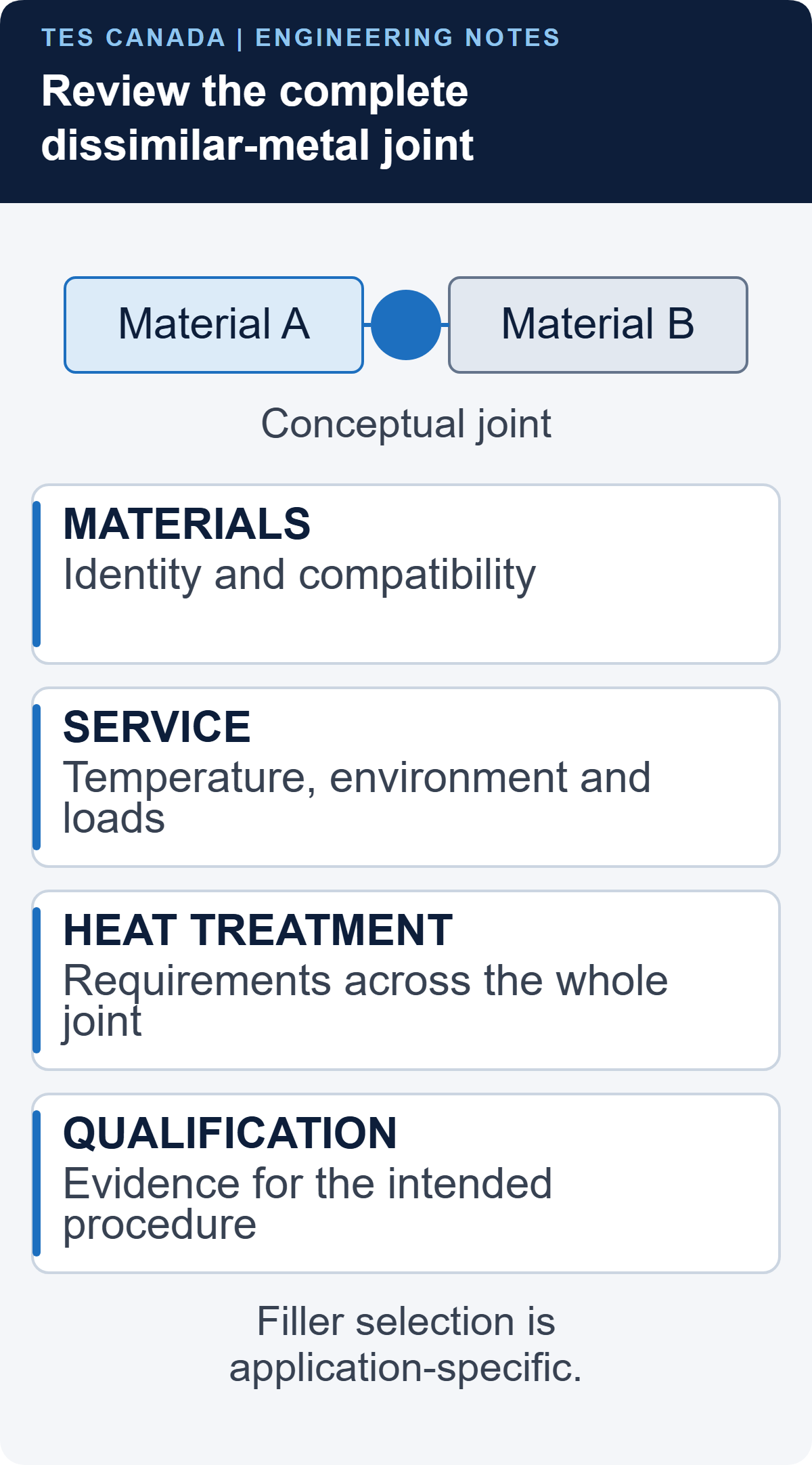
- Are heat treatment and the proposed fabrication sequence compatible with both materials and the weld?
- What qualification and examination evidence is needed?
The answers may affect the filler, joint arrangement or proposed repair concept. A materials review can therefore change more than the consumable specification.
Coordinate filler selection and heat treatment
Treat filler choice, welding sequence and heat-treatment requirements as connected decisions. Determine the applicable construction or repair rules, material-specific requirements and project specifications before finalising the procedure.
Where a proposed connection raises conflicting requirements, record the issue and evaluate an appropriate alternative. Do not assume that an exemption applicable to one component or activity resolves the metallurgy of the entire joint.
This article does not provide a consumable substitution table or numerical heat-treatment instructions. Those selections require a defined application.
Link the selection to qualification and execution
Qualification evidence must support the intended procedure under the governing basis. Relevant service-specific testing or additional project requirements should be identified rather than inferred from a generic statement that a procedure is qualified.
The production package should then retain the agreed material identities, consumable specification and relevant controls. Unplanned substitution needs review against that basis.
Make the engineering output usable
A useful assessment records the materials and service conditions considered, assumptions and gaps, proposed joint approach and the evidence needed before execution. It should also distinguish a recommendation requiring further verification from a decision supported by the completed review.
That gives owners, fabricators and inspectors a common basis for discussing the connection, rather than relying on a filler designation without its rationale.
Key takeaway: Select and qualify a dissimilar-metal joint for the conditions it must withstand. Filler compatibility, heat treatment and execution controls belong in the same engineering review.
TES materials and weld-integrity support connects material compatibility, welding procedures and inspection requirements for the proposed fabrication or repair.
References
- API RP 577, Welding Processes, Inspection, and Metallurgy, third edition (2020), with the reviewed 2025 errata; Sections 5.6 and 8.2.
- API RP 582, Welding Guidelines for the Chemical, Oil, and Gas Industries, fourth edition (2023); Section 6.3 and applicable material/heat-treatment provisions.
These are application-dependent references. Consult the licensed documents and the governing project requirements for acceptance and qualification rules.
Related TES Canada Services
Need support with this type of technical challenge?
TES Canada can help you assess the issue, select the right inspection or engineering approach, and develop a practical integrity management solution.
Contact TES Canada →